Achilles Tendon Pain in Knoxville, TN: Why It Lingers

You may have started noticing a sore spot above your heel after a run, a hike, or a few hard workouts. At first, it seemed manageable. Then the pain stayed around, especially during push-off, stairs, hills, or the first few minutes of activity. If you’re searching for “Achilles tendon pain Knoxville TN,” you’re probably looking for more than a quick way to quiet the symptoms. You want to understand why it keeps returning and how to get back to running, lifting, walking, or training with more confidence.
One thing we commonly see in our office is a tendon that has been asked to handle more than it can currently tolerate. That doesn’t necessarily mean something is seriously damaged. It does mean the tendon, calf, ankle, and training routine need to be looked at together.
Understand what the Achilles tendon does
The Achilles tendon is the strong band of tissue connecting the calf muscles to the back of the heel bone. It transfers force from the gastrocnemius and soleus muscles into the foot so you can push off the ground.
Every step, hill, jump, and calf raise places load through this system. The tendon is built to handle that demand, but it responds best when the load increases gradually and recovery keeps pace.
The painful area also matters:
- Mid-portion Achilles pain usually occurs several centimeters above the heel insertion.
- Insertional Achilles pain occurs where the tendon attaches to the heel bone.
- Mid-portion symptoms may be more sensitive to running, jumping, and repeated calf loading.
- Insertional symptoms may worsen with direct shoe pressure, uphill work, deep squats, or positions that compress the tendon against the heel.
The painful spot is important, but it may not tell the whole story. Calf strength, ankle movement, foot mechanics, training surfaces, footwear, and the way you distribute load can all influence how the tendon feels.
Achilles tendon pain knoxville tn: why it keeps coming back
Persistent symptoms often develop when the tendon’s workload changes faster than its capacity.
A sudden increase in training
A quick return to running, a jump in weekly mileage, more hill work, speed intervals, or additional court time can all increase Achilles demand. The same can happen when you begin walking more, change jobs, or spend long days on your feet.
Even a change that seems small can matter when several changes occur together.
Calf tightness or weakness
The gastrocnemius crosses both the knee and ankle. The soleus sits deeper and plays a major role in steady, repeated push-off. If either muscle is stiff, weak, or deconditioned, the tendon may take on more work than usual.
Protective guarding can add to the problem. When your body expects pain, you may shorten your stride, avoid loading one side, or move less through the ankle. That can reduce strength and make normal activity feel more demanding when you resume it.
Limited ankle movement
An ankle that doesn’t move well can change how the foot meets the ground. You may roll through the foot differently, lift the heel earlier, or compensate elsewhere in the leg.
This does not mean every Achilles problem comes from the ankle. It means ankle motion is one part of a larger movement pattern worth assessing.
Footwear and surface changes
Switching from supportive shoes to minimalist shoes, wearing older footwear, changing heel height, or moving from soft trails to hard pavement can alter the load reaching the tendon.
The same is true for suddenly adding hills. Uphill walking and running can increase calf and Achilles demand, while downhill movement may change how you control each step.
Too much rest, followed by too much activity
Complete rest may calm symptoms temporarily, but it can also reduce the tendon’s current capacity. Then, when you feel better, returning to your old mileage or workout routine too quickly can create another flare-up.
The goal is usually not complete avoidance or pushing through everything. It is finding a manageable level of activity and building from there.
Know the symptoms worth paying attention to
Achilles tendinopathy can cause:
- Tenderness along the tendon or at its heel attachment
- Stiffness when you first get moving
- Pain during or after running, jumping, or calf raises
- Discomfort when walking uphill or climbing stairs
- Thickening or sensitivity in part of the tendon
- Symptoms that improve during activity but return later
- Pain that is worse the next morning after a demanding day
Pain that changes your walking, keeps you from exercising, or continues for several weeks deserves a closer look. A tendon may need time to adapt, but repeatedly guessing at the cause can keep you stuck in a cycle of rest, activity, and flare-up.
Get a thorough evaluation before guessing
A careful evaluation begins with listening. We want to know when your pain began, what changed around that time, what activities make it worse, and what you’re trying to return to.
We may consider:
- The location of tenderness
- Calf strength and endurance
- Ankle and foot movement
- Single-leg balance and control
- Walking, running, or squat mechanics when appropriate
- Footwear, work demands, training surfaces, and recovery
- Whether symptoms fit a mid-portion or insertional pattern

This process helps separate an Achilles tendon issue from other causes of pain around the back of the ankle, heel, calf, or foot. It also helps us build a plan around your actual goals instead of handing you a routine that may not fit your body or schedule.
If your symptoms suggest a fracture, rupture, nerve problem, infection, blood clot, or another condition outside our scope, medical referral is the appropriate next step.
Build tendon capacity gradually
For many people, the practical foundation of care is progressive loading. That may include calf raises, isometric work, balance exercises, mobility work, and a gradual return to running or sport.
The right starting point depends on your symptoms.
For mid-portion symptoms, controlled calf strengthening may gradually improve tolerance. For insertional symptoms, early exercises may need to stay on level ground and avoid dropping the heel deeply below the forefoot, which can increase compression at the heel attachment.

A few useful principles include:
- Reduce aggravating activity without stopping all movement.
- Use cycling, swimming, or another tolerable option when appropriate.
- Increase one training variable at a time.
- Watch how your tendon responds later that day and the next morning.
- Avoid jumping from low activity straight back to full mileage.
- Progress from strength to faster movement, hills, and sport-specific work gradually.
Some discomfort during rehabilitation may be acceptable, but sharp pain, worsening weakness, or a clear increase in next-day symptoms is a reason to adjust the plan.
You can also read more about rehabilitative exercises that support lasting movement and how active patients can use sports chiropractic and injury rehabilitation as they return to their normal demands.
Where chiropractic care and shockwave therapy may fit
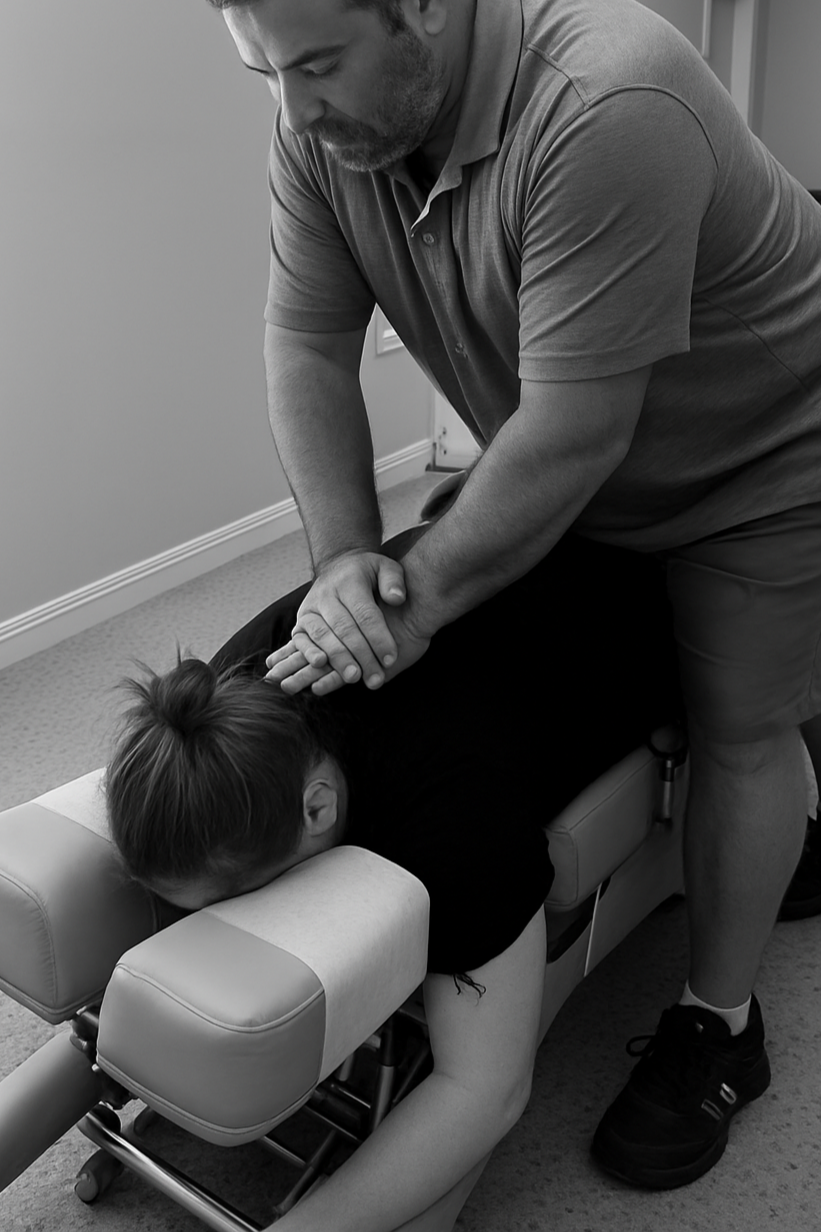
Personalized chiropractic care may include hands-on work for the foot, ankle, calf, or related joints; mobility exercises; strength progression; and guidance on training load. The goal is not simply to make the area feel different during an appointment. It is to help you understand what your tendon can handle now and how to build from there.
Shockwave Therapy may be considered for selected cases of persistent mid-portion Achilles tendinopathy, particularly when symptoms have continued despite a well-structured loading plan. It uses focused sound-wave pulses applied to the target tissue.

Shockwave is not a shortcut, and it is not appropriate for every type of heel or ankle pain. Research results are more consistent for some chronic mid-portion cases than for insertional problems, and improvement is not guaranteed. It also works best as part of a broader plan that addresses strength, activity, and recovery rather than as a stand-alone treatment.
You can learn more about Shockwave Therapy in Knoxville, including what a visit may feel like and when another type of evaluation is more appropriate. If your symptoms are closer to the bottom of the heel, our guide to plantar fasciitis treatment in Knoxville explains why heel pain can come from more than one structure.
Know when medical evaluation comes first
Seek prompt medical evaluation if you have:
- A sudden pop followed by an inability to push off or stand on your toes
- Sudden severe pain, bruising, or a visible change in the tendon
- An inability to bear weight
- Significant calf swelling, warmth, redness, or tenderness
- A hot, red foot or ankle with fever
- New numbness or weakness
- Unexplained or worsening night pain
- Rapidly worsening symptoms or pain after a major injury
Also mention any recent use of fluoroquinolone antibiotics or other medications that may affect tendon health. When in doubt, it is safer to have concerning symptoms checked before beginning exercise-based care.
Frequently asked questions
How long does Achilles tendon pain take to improve?
There isn’t one reliable timeline. Symptoms that have been present for several months usually need a slower progression than a recent flare-up. Improvement often depends on tendon capacity, training load, calf strength, ankle motion, footwear, and consistency with the plan.
Should I stop running completely?
Not always. Temporarily reducing mileage, speed, hills, or frequency may be more useful than stopping all movement. The right level depends on your pain response and whether symptoms settle by the next day.
Is stretching enough for Achilles pain?
Stretching may help if calf stiffness is contributing, but it is rarely the whole plan. Tendons also need appropriate strengthening and gradual exposure to the activities you want to resume.
Can Shockwave Therapy help persistent Achilles tendinopathy?
It may help some people with persistent mid-portion symptoms, especially when combined with progressive loading. Results vary, and it may be less predictable for insertional pain. An assessment is important before considering it.
When should I see a chiropractor in Knoxville for Achilles pain?
Consider an evaluation when symptoms are changing your walking or training, returning after rest, or not improving with reasonable activity changes. We’ll listen to what has been happening, assess the lower-leg movement pattern, and explain whether chiropractic care is a reasonable next step.
Let’s find a practical next step
You don’t have to keep alternating between doing nothing and doing too much. At Dr. Arthur Poisal Chiropractic, we take time to understand your concerns before creating a customized plan. Care is focused on useful, lasting progress so you can work toward running, lifting weights, or simply walking comfortably again.
Call (865) 687-5700 or visit us at 3371 Whittle Springs Road, Knoxville, TN 37917. We’ll be happy to talk through what you’ve been experiencing and help you decide where to begin.