Heel Pain Chiropractor Knoxville TN: What to Expect

If you’re looking for a heel pain chiropractor knoxville tn, you may be dealing with more than a sore foot. Heel pain can change how you walk, stand at work, exercise, sleep, or get out of bed in the morning.
You may wonder whether the problem is plantar fasciitis, a tendon, your shoes, a recent increase in activity, or something else. You may also want to know what will happen during an appointment before you schedule one.
At Dr. Arthur Poisal Chiropractic, we start by listening to the full story. Then we assess how your foot, ankle, calf, and connected movement patterns are working before discussing a personalized plan.
What to expect from a heel pain chiropractor knoxville tn
A first visit should be more than a quick look at the painful spot. Heel pain has several possible causes, and the right care depends on what your symptoms and examination show.
We’ll listen to your symptoms
Expect questions about:
- When the pain started
- Whether it began after an injury or activity change
- Pain with the first steps after sleeping or sitting
- Walking, standing, running, lifting, or work demands
- Your shoes and the surfaces you spend time on
- Previous treatments or home exercises
- Numbness, tingling, weakness, or back symptoms
- What you want to return to doing comfortably
One thing we commonly see in our office is that patients describe the pain as “heel pain,” even though the pattern can provide clues about the structure involved. Pain underneath the heel may behave differently from pain at the back of the heel or burning pain along the inside of the ankle.
We’ll examine the foot and the bigger movement pattern
Depending on your symptoms, an assessment may include:
- Foot and ankle range of motion
- Calf flexibility
- Foot and ankle strength
- Balance and single-leg control
- Tenderness around the plantar fascia, heel pad, Achilles tendon, or joints
- Walking mechanics
- How your knee, hip, and lower back contribute to movement
The goal is not to assume every problem comes from the spine. Your heel is part of a connected system, but the painful area and the source of the stress are not always the same.

Why heel pain can continue
The plantar fascia is a strong band of tissue along the bottom of your foot. It helps support the arch and assists with push-off when you walk or run. The calf muscles, Achilles tendon, ankle joint, smaller foot muscles, and nervous system all influence how force travels through the foot.
Heel pain may persist when the tissues are repeatedly asked to handle more load than they can currently tolerate. Common contributors include:
- A sudden increase in running, walking, hiking, or gym training
- Long periods of standing on hard surfaces
- Calf or ankle stiffness
- Weakness in the foot or lower leg
- Changes in footwear
- An old ankle or foot injury
- Repeated cycles of overdoing activity, then resting completely
- Altered walking caused by pain somewhere else
A lot of patients assume that rest alone will solve the problem. Rest may reduce irritation for a short time, but the foot still needs to rebuild strength and tolerance. If you return to your normal activity too quickly, the symptoms may come back.
This is why practical care often combines temporary load changes with mobility work, strengthening, and a gradual return to the activities that matter to you.
Common causes of heel pain
Plantar fascia-related pain is one possibility, especially when pain is sharp near the bottom or inner side of the heel and is worse with the first steps after rest. If that sounds familiar, you can learn more about plantar fasciitis treatment in Knoxville.
Other causes can include:
- Achilles tendon irritation near the back of the heel
- Heel-pad sensitivity, often worse on hard surfaces
- An ankle or foot joint problem
- A stress injury
- Nerve irritation or entrapment
- A calf or foot muscle issue
- Arthritis or another inflammatory condition
- Pain referred from the lower back or leg
Your symptoms may not fit one simple category. Burning, tingling, numbness, significant swelling, night pain, or pain that does not change with movement may point toward a different evaluation.
That is one reason a thorough assessment matters before choosing a treatment.
Treatment options depend on what we find
There is no single routine that works for every person with heel pain. Your plan may include one or more of the following options when clinically appropriate.
Mobility work
Gentle mobility exercises may address limited ankle movement, calf stiffness, or difficulty moving through the foot comfortably. The goal is not to force a painful stretch. It is to help the foot and ankle handle normal movement with less strain.
You can learn more in our guide to plantar fasciitis stretches and when they may not be enough.
Rehabilitative exercises
Progressive exercises may help improve calf strength, foot control, balance, and tolerance for walking or running. Depending on your goals, we may discuss exercises that support a gradual return to lifting, recreational activities, or longer periods on your feet.
Our article on rehabilitative exercises in Knoxville, TN explains why active care can be an important part of lasting progress.

Manual chiropractic care
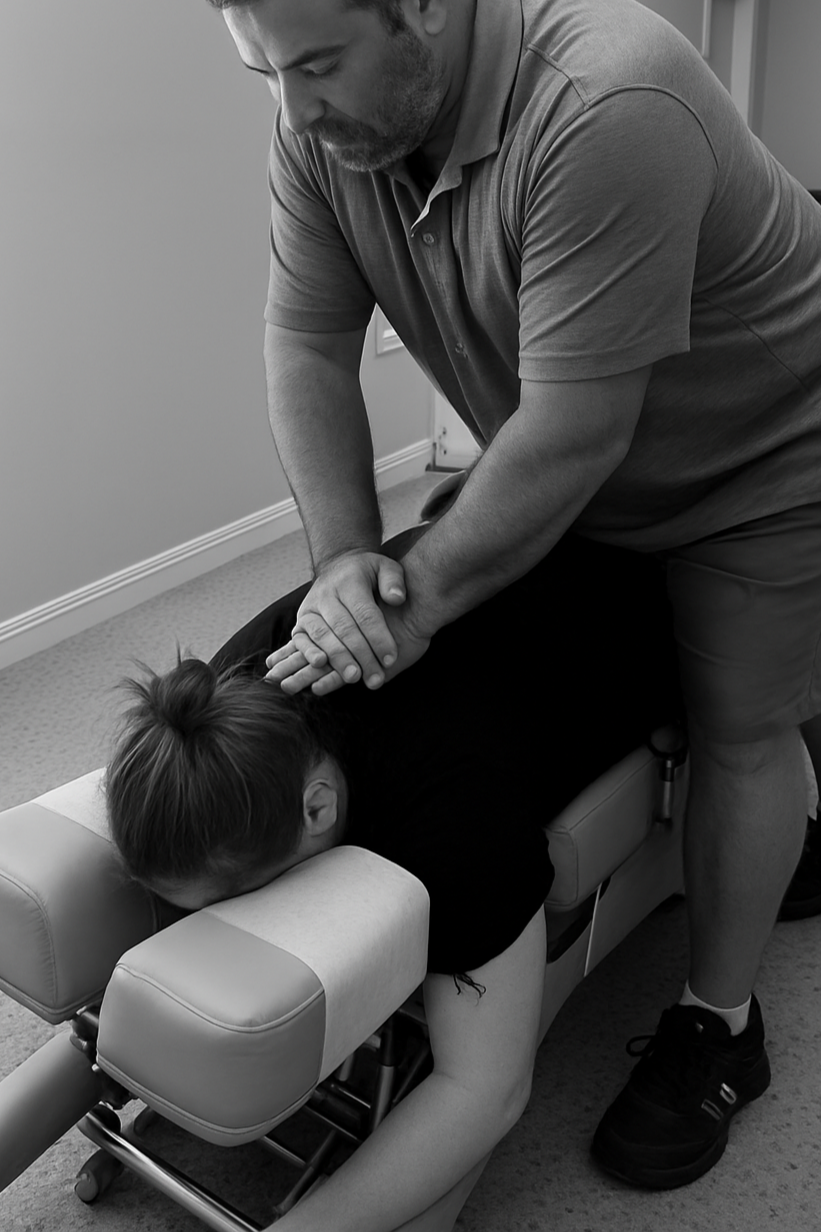
Hands-on care may be used for the foot, ankle, calf, knee, hip, or back when the examination shows that restricted movement or joint mechanics may be contributing to your symptoms.
A chiropractic adjustment is one possible tool. It is not a substitute for understanding the condition or rebuilding the strength and movement capacity you need. We’ll explain why a technique is being recommended and how it fits into the larger plan.
Shockwave Therapy
Shockwave Therapy may be considered for selected persistent plantar fascia, tendon, muscle, or other soft-tissue concerns.
The treatment uses mechanical sound-wave pulses delivered through a handheld applicator. You may feel tapping or pressure during a session. It can be uncomfortable, and it does not guarantee improvement. It is also not appropriate for every diagnosis.
When it fits, shockwave therapy is usually considered alongside load management, mobility, and progressive exercises rather than as a stand-alone solution.

When heel pain needs another type of care
A responsible evaluation includes knowing when chiropractic care is not the right first step.
Seek prompt medical evaluation if you have:
- An inability to bear weight
- A major injury, deformity, or sudden bruising
- A hot, red, or rapidly swollen foot
- Fever or drainage from a wound
- New or worsening numbness or weakness
- Severe pain at rest or during the night
- A cold, pale, or discolored foot
- Calf swelling or shortness of breath
- Diabetes with a foot wound
- Pain that is rapidly worsening
A referral for imaging or another professional opinion may also be appropriate if symptoms do not improve as expected. That may include your primary care provider, a podiatrist, orthopedic clinician, physical therapist, or another specialist.
What progress may look like
Progress is not always an immediate change in pain. We may also look at whether you can:
- Walk farther without changing your stride
- Stand through a work shift more comfortably
- Get up after sitting with less hesitation
- Return to running gradually
- Lift weights without repeatedly aggravating the heel
- Sleep with fewer interruptions
- Complete exercises with better control
Heel pain often improves gradually. The timeline depends on how long it has been present, the cause, your activity demands, and how consistently you can follow the plan.
We’ll reassess your response and adjust the approach when needed.
Frequently asked questions
Do I need a diagnosis before scheduling?
No. You can schedule an evaluation if you are unsure what is causing your heel pain. We’ll review your symptoms, examine your movement, and explain whether chiropractic care appears appropriate.
Can chiropractic care help plantar fascia-related heel pain?
It may help some people when combined with appropriate mobility work, exercise, activity guidance, and other care. The best approach depends on your examination. No treatment can guarantee a specific result.
Should I stop running or exercising?
Not always. You may need to reduce distance, intensity, hills, jumping, or frequency for a period of time. A gradual modification is often more useful than repeatedly pushing through sharp pain or stopping all activity for weeks.
Is shockwave therapy right for every heel problem?
No. It may be considered for certain persistent soft-tissue conditions, but it is not appropriate for every cause of heel pain. A careful assessment should come first.
When should I schedule an evaluation?
Consider scheduling if heel pain has lasted several weeks, keeps returning, affects your walking or work, or prevents you from running, lifting, or exercising comfortably. Prompt medical care is more appropriate when red-flag symptoms are present.
Let’s find a clear next step
You don’t have to guess whether your heel pain is coming from the plantar fascia, calf, ankle, foot, or another part of your movement pattern.
At Dr. Arthur Poisal Chiropractic, we’ll take time to listen, assess the details, and create a plan around your symptoms and goals. Whether you’re hoping to return to running, lifting weights, or simply walking comfortably around Knoxville, we’re here to help you understand your options.
Call (865) 687-5700, complete the contact form, or visit us at:
Dr. Arthur Poisal Chiropractic
3371 Whittle Springs Road
Knoxville, TN 37917