Lower Back Pain When Bending Over Knoxville TN: What Helps

If your back catches when you reach for a shoe, lift a laundry basket, or pull weeds in the yard, bending can become something you start to avoid. That hesitation makes sense, and it is also a useful clue. Lower back pain when bending over in Knoxville, TN, is a movement pattern we can look at together, not a label that explains everything on its own.
Sometimes the pain is sharp and brief. Sometimes it is a deep ache that shows up a few hours later. You may feel it in one spot, across the whole lower back, or in a hip or leg. How it started and what changes it both matter, even when the sore area does not tell the whole story.
Bending discomfort does not point to one cause by itself. The painful area is part of the picture, but so are your hips, muscles, joints, recent activity, and the way your body is responding to movement. Let’s look at what may be going on, and what you can try.
Lower Back Pain When Bending Over Knoxville TN: Common Causes
Forward bending involves more than your lower back. Your hips and pelvis should contribute too. If your hips are stiff, the movement feels unfamiliar, or you’re reaching for something far away, more movement may come from your lower back. That isn’t automatically harmful, but if the area is sensitive, a repeated or heavily loaded bend may bring on symptoms.
Some common contributors include:
- Muscle or soft-tissue irritation. A new workout, yard work, or repeated lifting can irritate muscles and nearby tissues. It may feel sore, tight, or tender, particularly when you repeat the task.
- Temporary changes in load tolerance. Your back may be less ready for a sudden increase in bending, lifting, or repetitions than it was for your usual routine.
- Disc-related irritation. Bending changes how load is shared across spinal structures, including the discs. A disc may contribute to pain in some cases, but pain during bending alone doesn’t diagnose a disc problem. Scan findings also need to be considered alongside your symptoms and examination.
- Stiffness or a previous injury. A past flare can make movement feel guarded, and reduced movement may leave you feeling less prepared for normal tasks.
- Other joint or movement sensitivities. Different structures can be sensitive for different reasons. For example, facet joints at the back of the spine are often more provoked by leaning backward than by bending forward, so bending pain alone doesn’t establish that they’re the source.

Try a comfortable hip hinge
For tasks that currently bother you, try letting your hips move back as your torso tips forward. Keep the item close to your body and bend your knees as needed. This can shift some of the movement toward your hips, especially when you’re lifting.
A hip hinge is a useful option, not a rule that your spine must stay perfectly straight. Normal bending is part of daily life. The goal is to find a comfortable way to move and gradually build tolerance, not to fear every curve or bend.
What bending pain often feels like
Symptoms vary from person to person, and the same back can behave differently from one week to the next. Patterns we listen for include:
- A sharp catch during the bend itself, especially when reaching down or forward
- A dull ache that builds during or after repeated bending, lifting, or yard work
- Stiffness when you straighten up again, or a moment of hesitation before you can stand fully
- Soreness that shows up the next morning after a busy day
- Pain that stays in the lower back, or travels into a buttock, hip, or leg
None of these patterns is a diagnosis on its own. They are clues that help us understand which movements and loads your back is reacting to right now.
Why bending pain can stick around
One thing we commonly see in our office is that a flare can change how someone moves. You brace, move more cautiously, or avoid bending altogether. That can make sense at first when a movement is painful. But if you stop using the movement for a long time, it may feel less familiar and more demanding when you try it again.
Pain can also create a cycle: you do more than your back is ready for, symptoms flare, you rest a lot, then return to the same task at full effort. Guarding, deconditioning, poor sleep, stress, and worries about causing damage can all affect how confident movement feels.
This doesn’t mean your pain is imaginary. It means sensitivity, activity levels, and expectations can influence how your back responds. A flare doesn’t automatically mean you’ve injured yourself again. If you’d like more on recurring symptoms, read our guide to why chronic back pain can keep coming back.
What you can do at home
You don’t need to force painful movements, but prolonged bed rest and avoiding all bending can make it harder to return to everyday tasks. Instead, make temporary adjustments and keep a comfortable level of activity.
- Scale down, rather than stop everything. Reduce the weight, repetitions, or time spent on the task that triggers symptoms. Break up a big job into smaller parts.
- Keep walking if it feels manageable. Short, easy walks can help you stay active. Adjust your pace or distance if symptoms increase substantially.
- Practice small, easy bends. Start with a shallow hip hinge or reach toward a raised surface. Over time, gradually increase the range or task demand as your comfort allows.
- Use heat if it feels soothing. A warm shower or wrapped heating pad may ease stiffness for some people. Use it safely and stop if it makes symptoms worse.
- Build strength progressively. A plan may include hip, trunk, and leg exercises. Start at a level you can manage and build gradually rather than testing your limits on a good day.
If symptoms are new or severe, see our practical guide to what to do when your back hurts.
In Knoxville, bending demands can show up in everyday ways: reaching into a work truck, moving equipment, cleaning, gardening, or tending a yard. Hiking around East Tennessee can also involve uneven ground and repeated changes in posture. You don’t need perfect technique for every movement. A little planning (keeping loads close, taking breaks, and building activity back up) can make these tasks feel more manageable.
What a thorough assessment looks like
A useful assessment starts with listening. We’ll ask when the pain began, which bends bring it on, what eases it, and how it affects your work, sleep, and daily routine. We’ll also ask about previous injuries, leg symptoms, and what you’ve already tried.
Then we look at how you move. That may include comfortable bending, hip movement, walking, strength, and other checks based on your symptoms. The goal is to understand the pattern, not assume that the sore spot tells the whole story. If your symptoms suggest a need for medical evaluation beyond our scope, we’ll explain that and help you understand the next step.
Care depends on what we find
There isn’t one treatment that suits every person with bending pain. After an assessment, care may include:
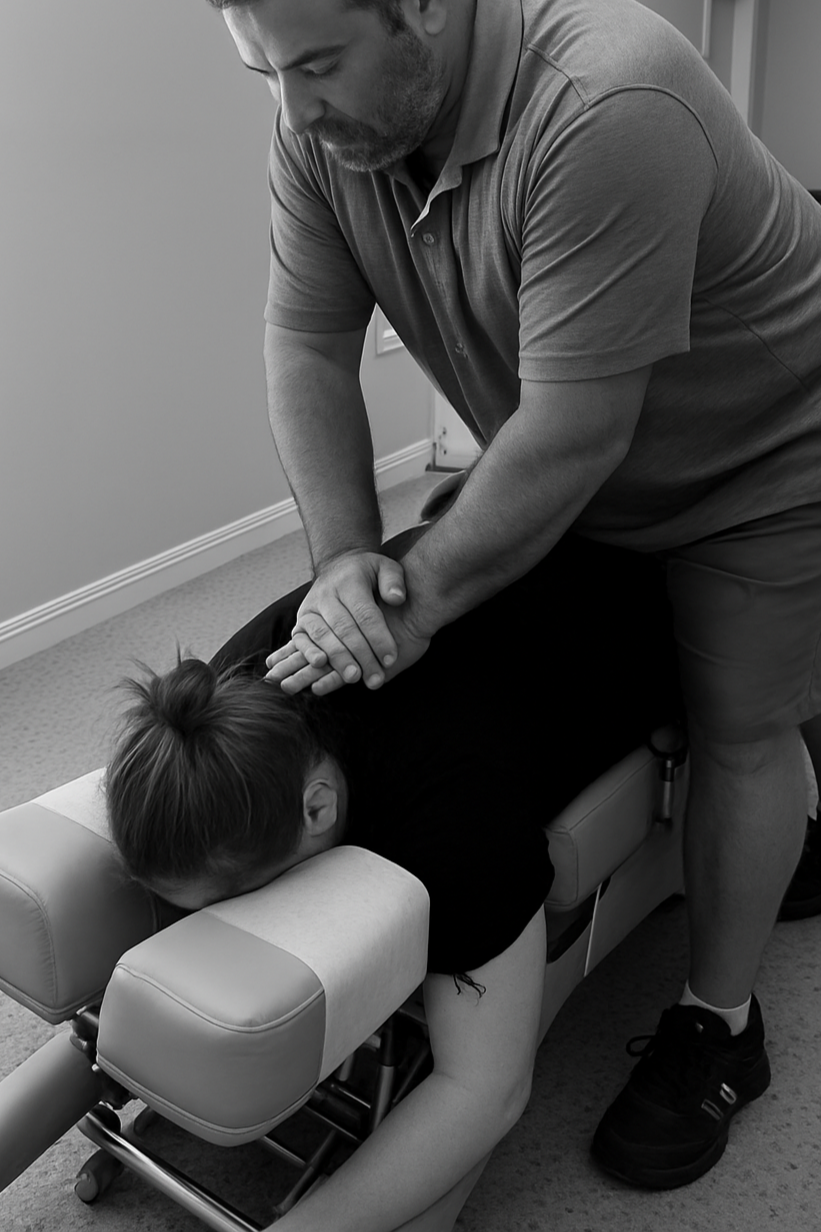
- Chiropractic adjustments or mobility care. When appropriate, hands-on care may be used to support movement and comfort. It’s one possible part of a plan, not a guarantee or a substitute for understanding the cause and your goals. Learn more about low back pain relief.
- Rehabilitative exercise and graded bending. Practicing manageable versions of the movements you need can help you build strength and confidence over time. Progress should match your response.
- Shockwave therapy, in selected cases. If an assessment points to a relevant soft-tissue or muscle contributor, shockwave therapy may be considered as one option. It isn’t appropriate for every type of back pain.
- Spinal decompression, when relevant. If your symptoms and examination suggest a disc-related pattern, spinal decompression therapy may be discussed. Bending pain alone isn’t enough to determine whether it fits.
We take time to understand your specific concerns before creating a customized plan. The aim is useful progress in real life, whether that means getting back to running, lifting weights, working comfortably, or simply walking with more confidence.
When to get assessed
Consider an assessment if bending pain keeps returning, is limiting daily activities, isn’t improving, or comes with pain traveling into your leg, numbness, or tingling. New or worsening symptoms deserve attention.
Signs that need medical care first
Seek prompt medical evaluation for new bowel or bladder changes, numbness around the groin or saddle area, progressive weakness, fever, significant trauma, or unexplained weight loss alongside back pain. These symptoms need medical attention rather than a routine chiropractic appointment.
FAQs
Should I stop bending until my back feels normal?
Not necessarily. Temporarily change tasks that strongly aggravate your symptoms, but try to keep up comfortable movement. Gradually returning to bending may be more helpful than avoiding it indefinitely.
Does pain when I bend mean I have a herniated disc?
No. Bending pain can have several contributors. Symptoms and an appropriate examination matter; pain with one movement alone can’t confirm a disc problem.
Should I bend at my hips or my back?
A comfortable hip hinge can be helpful for lifting or repeated tasks, but your spine is meant to move too. Aim for controlled movement that you can gradually build up, rather than holding your back rigid.
Can I keep walking or hiking?
Often, you can continue at a comfortable level and adjust your route, pace, or distance as needed. If an activity causes a major symptom increase or new symptoms, stop and seek guidance.
Local care in North Knoxville
If bending has started to limit work, yard tasks, or the activities you enjoy, we’re happy to listen and help you understand your options. Our office is on Whittle Springs Road, and we care for patients from North Knoxville, Fountain City, and the surrounding communities. Call (865) 687-5700 or visit us at 3371 Whittle Springs Road, Knoxville, TN 37917. You can also send us a message through our contact form. Let’s find a manageable place to start.