Morning Heel Pain in Knoxville, TN: Why Your First Steps Hurt

If you searched for “morning heel pain knoxville tn,” you’re probably not looking for a textbook definition. You want to know why those first few steps out of bed hurt so much, and what you can do about it.
The pain may feel sharp near the bottom or inner side of your heel. It may ease after you walk for a few minutes, only to return after sitting, driving, or standing for a long time. This pattern is common with plantar fascia irritation, but it isn’t the only possible cause of heel pain.
Let’s look at why mornings can be especially uncomfortable and when a closer evaluation may help.
Why “morning heel pain knoxville tn” is worse with the first steps
The plantar fascia is a strong band of connective tissue that runs along the bottom of your foot. It connects the heel area to the base of the toes and helps support your arch as you stand and walk.
Your plantar fascia does not act alone. Your calf muscles, Achilles tendon, ankle joint, foot muscles, and the way you load your leg all affect how much stress reaches the heel.
During the night, your foot stays in a relatively relaxed position for several hours. The plantar fascia and nearby tissues may become less flexible while you rest. When you stand up, your body suddenly asks those tissues to accept your full weight and help propel you forward.
That quick change from rest to weight-bearing can make the first few steps feel sharp or bruised.
This is also why pain can appear after:
- Sitting at your desk
- Driving across Knoxville
- Watching television
- Resting after a workout
- Finishing a long shift on your feet
The problem is often less about the first step itself and more about the sudden load placed on a stiff foot and ankle.

Notice the pattern, not just the painful spot
One thing we commonly see in our office is that patients focus on the heel because that is where they feel pain. That makes sense. But the source of the stress may involve other areas.
For example, a stiff calf can limit how far your ankle moves when you walk. Your foot may then compensate by allowing more motion through the arch. A sudden increase in running mileage may overload tissues that were not ready for the change. A weakness in the hip or leg may also alter how you move and place more demand on the foot.
That does not mean every heel problem comes from your spine. It means your foot works as part of a connected movement system.
Common symptoms
Plantar fascia-related heel pain often includes:
- Sharp or stabbing pain with the first steps in the morning
- Soreness near the bottom or inner side of the heel
- Pain after sitting or resting
- Tenderness after long periods of standing
- Symptoms that increase after walking, running, jumping, or climbing stairs
- A feeling that the foot loosens up, then becomes sore again later
The pain may be in one foot or both. It can also change depending on your shoes, the surface you walk on, and how much activity you have done recently.
What can keep heel pain going?
Several factors can make the plantar fascia and surrounding tissues more sensitive over time.
Sudden changes in activity
A quick increase in running distance, walking, court sports, hiking, or gym training can exceed your current tissue tolerance. Even a new job that requires more standing can create a similar change.
The activity itself may not be harmful. The issue is often that the increase happens faster than your foot, ankle, and calf can adapt.
Calf and ankle stiffness
Limited ankle movement can increase tension through the bottom of the foot. Tight calf muscles may be part of the problem, especially if you spend a lot of time sitting or if your daily activity has changed.
Footwear and hard surfaces
Very flat, flexible, worn-out, or unsupportive shoes may increase the work your foot has to do. Walking barefoot on hard floors can also aggravate symptoms for some people.
This does not mean you need an expensive shoe or a rigid insert. It means your footwear should match your current needs, especially if you stand or walk for much of the day.
Standing jobs
Nurses, teachers, retail workers, warehouse employees, and others who spend hours on their feet may place repeated stress on the heel without enough recovery time.
Short sitting breaks, cushioned standing surfaces, task rotation, and supportive shoes may reduce the daily load while the area settles.
Body weight and aging
Any increase in load can increase demand on the plantar fascia. Weight is only one factor, and heel pain is not a personal failure. As we age, tissue recovery and natural heel cushioning may also change. These factors can make gradual activity increases and recovery more important.
When should you have heel pain evaluated?
You may want an evaluation if your pain:
- Continues for several weeks despite reasonable home care
- Interferes with walking, work, sleep, or exercise
- Keeps returning whenever you increase activity
- Causes you to limp or change your normal stride
- Is getting worse rather than gradually improving
A thorough assessment should include more than pressing on the sore spot. We may look at:
- Your symptom history and activity changes
- Foot and ankle movement
- Calf flexibility
- Strength and balance
- Walking or running mechanics
- Footwear and work demands
- The way your knee, hip, and other leg joints contribute to movement
We also consider other possible causes, including Achilles tendon problems, nerve irritation, stress injury, arthritis, or an issue that needs medical or orthopedic evaluation.
Seek prompt medical care for a major injury, inability to bear weight, significant swelling, deformity, a hot or red foot with fever, new numbness or weakness, or rapidly worsening pain.
What you can do at home
Early care should focus on reducing unnecessary stress while keeping the foot moving in a manageable way.
Try a gradual morning routine
Before standing, gently move your ankle up and down several times. You can also sit on the edge of the bed and slowly stretch your toes toward your shin for a few seconds.
The goal is not to force a deep stretch. It is to make the transition from rest to standing less abrupt.
Stretch your calf consistently
A gentle wall stretch can help address calf and ankle stiffness:
- Place both hands on a wall.
- Step one foot behind you.
- Keep the back heel down.
- Hold a comfortable stretch for 20 to 30 seconds.
- Repeat with the back knee slightly bent to reach a different part of the calf.
Stop if the stretch creates sharp pain or makes your symptoms worse later.

Adjust your activity temporarily
You may not need to stop everything. Instead, reduce the activities that create a sharp increase in pain and choose lower-impact options for a short time.
For example, you might replace a long run with cycling, shorten a walk, or divide standing tasks into smaller periods. Then rebuild gradually as your symptoms and movement improve.
Choose supportive footwear
Wear comfortable shoes with reasonable cushioning and support during the day. Limit long periods barefoot on hard floors if that clearly increases your pain.
Over-the-counter heel cups or arch supports may help some people, but they are not a substitute for understanding why the pain started.
For more guidance on how exercises can support lasting movement improvements, see our article on rehabilitative exercises in Knoxville, TN.
How personalized care may help
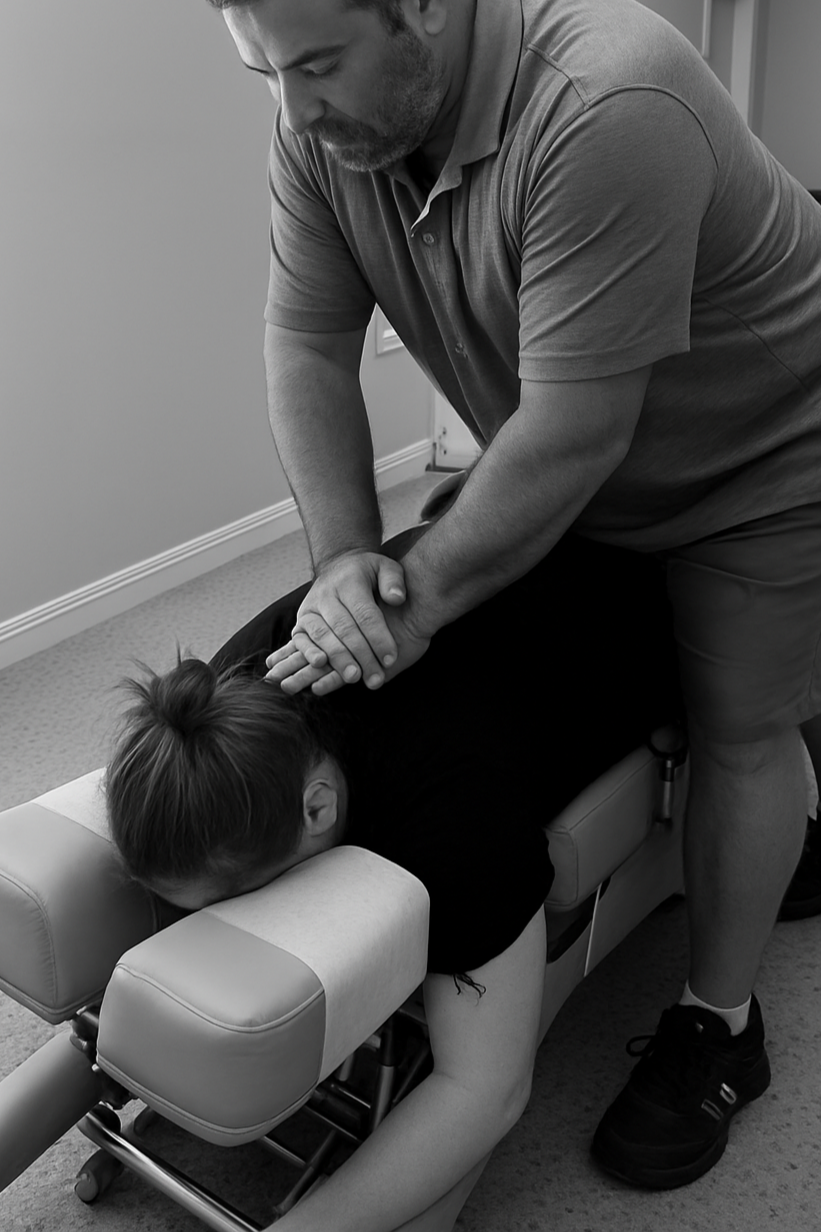
Chiropractic care for heel pain is not about applying the same technique to every foot. We take time to listen to your story, understand your goals, and assess the movements that may be contributing to the problem. If you want a broader look at our approach to plantar fasciitis treatment in Knoxville, this is where that bigger picture often starts.
Depending on what we find, care may include:
- Hands-on work for the foot, ankle, calf, or related joints
- Chiropractic adjustments when appropriate
- Mobility exercises
- Calf and foot strengthening
- Balance and movement-control work
- Guidance for returning to walking, running, lifting, or work
- Temporary changes to training load and recovery
The goal is to help you understand what your foot needs and give you a practical plan between visits. If your goal is to return to running, lifting weights, or simply walking comfortably again, that goal should be part of the conversation.

When Shockwave Therapy may be considered
For selected persistent plantar fascia or other soft-tissue problems, Shockwave Therapy in Knoxville may be one option to discuss.
Shockwave Therapy uses focused sound-wave pulses delivered to a specific area. It is non-invasive and may be considered when symptoms have lingered despite appropriate activity changes and exercise.
It is not right for everyone. Treatment can be uncomfortable, and improvement is not guaranteed. A careful assessment is important before deciding whether it fits your condition. It should be part of a broader plan rather than viewed as a stand-alone answer.
You can also learn more about how chiropractic care can support mobility when foot, ankle, and leg movement are affecting daily activity.
Frequently asked questions
Why does heel pain hurt most in the morning?
The plantar fascia and nearby tissues can become stiff during overnight rest. Your first steps suddenly place weight and stretch on those tissues, which can make the pain feel sharper than it does after you have been moving.
Is a heel spur the reason my first steps hurt?
Not necessarily. Heel spurs can appear on imaging without causing pain. The painful tissue may be the plantar fascia or another structure around the foot and ankle. An evaluation helps determine what is most likely contributing to your symptoms.
Should I keep running with heel pain?
That depends on the severity of your symptoms and how they respond during and after activity. Continuing through sharp or worsening pain may keep the area irritated. A temporary reduction in mileage, followed by a gradual return, is often more reasonable than an abrupt increase-and-rest cycle.
Can heel pain improve without treatment?
Some cases improve with consistent changes to activity, footwear, stretching, and strengthening. If symptoms persist, keep returning, or affect your normal activities, a personalized evaluation may help clarify the next step.
When should I schedule an evaluation?
Consider scheduling an evaluation if the pain has lasted several weeks, affects your walking or work, or prevents you from doing activities you value. Prompt medical care is more appropriate for major injury, marked swelling, deformity, fever, numbness, weakness, or an inability to bear weight.
Let’s make your next step easier
Morning heel pain can be frustrating, especially when it changes how you walk, work, exercise, or start your day. You do not have to guess whether the problem is coming from your foot, ankle, calf, or a broader movement pattern.
At Dr. Arthur Poisal Chiropractic, we’ll take time to hear what has changed, assess how you move, and explain reasonable options for your situation.
Call (865) 687-5700 or visit us at 3371 Whittle Springs Road, Knoxville, TN 37917. We’ll be happy to listen and help you decide where to begin.