Neck Pain When Lying Down Knoxville TN: What Helps

If your neck starts aching when you settle onto the couch or get into bed, it can be hard to find a comfortable position. You may wonder whether it’s your pillow, the way you’re reclining, or something that built up during the day. Neck pain when lying down in Knoxville, TN, can have several contributors, so the position itself doesn’t tell the whole story.
One thing we commonly see in our office is that symptoms can feel more noticeable once you stop moving. Your neck may have handled a busy day of driving, screen time, or exercise, then start to complain when you finally relax. Let’s look at what may be going on and what you can try safely.
Neck Pain When Lying Down Knoxville TN: Common Causes
Your head and neck are supported by muscles, joints, and other soft tissues. Their comfort can change with the position you hold and the demands placed on them throughout the day.
- Pillow height: A pillow that’s too high may bend your neck forward or sideways. One that’s too flat may let your head drop back or down.
- Reclining position: A couch or recliner can hold your head forward, tipped back, or turned to one side for longer than you realize.
- Staying at the edge of your range: If your head rests near the limit of a comfortable movement, small neck joints and surrounding muscles may become irritated.
- Daytime load: Long periods at a desk, looking down at a phone, driving, or training can leave muscles tired or guarded. You may notice that sensitivity most when the day slows down.
- Muscle or nerve irritation: Tight, protective muscles may contribute to an ache. Irritation around a nerve may be more noticeable when you settle, especially if symptoms travel into an arm or hand.
The sore spot doesn’t always reveal the full source. Your neck, upper back, shoulders, daily movement, and resting position can all affect how the area feels.

Why Does It Keep Coming Back at Night?
A lot of patients assume that a painful evening means they chose the wrong pillow. Pillow fit can matter, but it may not be the only factor. If the same position, pillow setup, or long stretch of daytime activity repeats night after night, the neck may keep meeting a similar load.
Stress can also make it harder to let go of muscle tension. And when tissues are sensitive, even a familiar position may feel uncomfortable sooner than it used to. That doesn’t automatically mean something serious is happening, but pain that keeps returning deserves attention, especially if it lingers into the day.
If you also wake with neck discomfort, read our guide to why neck pain can be worse in the morning. If desk time may be part of your pattern, see how desk work can contribute to neck and back pain.
Try These Position and Comfort Changes
If your symptoms are mild and you don’t have concerning symptoms, a few small experiments may help you understand whether your setup is contributing. Change one thing at a time so you can tell what feels better or worse.
- Check your pillow position. When lying on your side, aim to keep your head level rather than tipped toward the mattress or ceiling. On your back, look for comfortable support without pushing your chin toward your chest or letting your head fall far back.
- Try a folded-towel test. A small, folded towel can help you test a modest change in neck support before buying a new pillow. Keep it comfortable, and stop if it increases pain.
- Avoid falling asleep upright. If you tend to doze off in a recliner, see whether you can move to a bed before you fall asleep. A reclined position may leave your head bent or turned for a long time.
- Move gently before bed. Slowly turn your head a little to each side or nod within a comfortable range. Don’t force a stretch or push through sharp pain, tingling, or symptoms that spread.
- Try comfortable warmth. A warm shower or comfortably warm pack may ease muscle tightness. Protect your skin and stop if the heat feels unpleasant.
- Consider changing stomach-sleeping habits. Sleeping on your stomach usually means keeping your head turned to one side. If that seems to aggravate your symptoms, gradually try side or back sleeping instead.
There isn’t one pillow type or position that works for everyone. Comfort and a relaxed, supported neck are more useful guides than a particular brand or a perfect-looking posture.

When Should You Get Neck Pain Checked?
Consider an assessment if pain keeps returning, persists into the day, disrupts sleep, or makes everyday movement difficult. It’s also worth getting checked if you have headaches or symptoms that travel into your arm or hand. Numbness, tingling, or weakness can change what kind of evaluation is appropriate.
Seek urgent medical care for neck pain after a significant injury, a sudden severe headache, fever with marked neck stiffness, progressive weakness, trouble with balance or walking, or new bladder or bowel changes. These symptoms need prompt medical attention rather than a pillow adjustment.
What an Assessment and Care May Involve
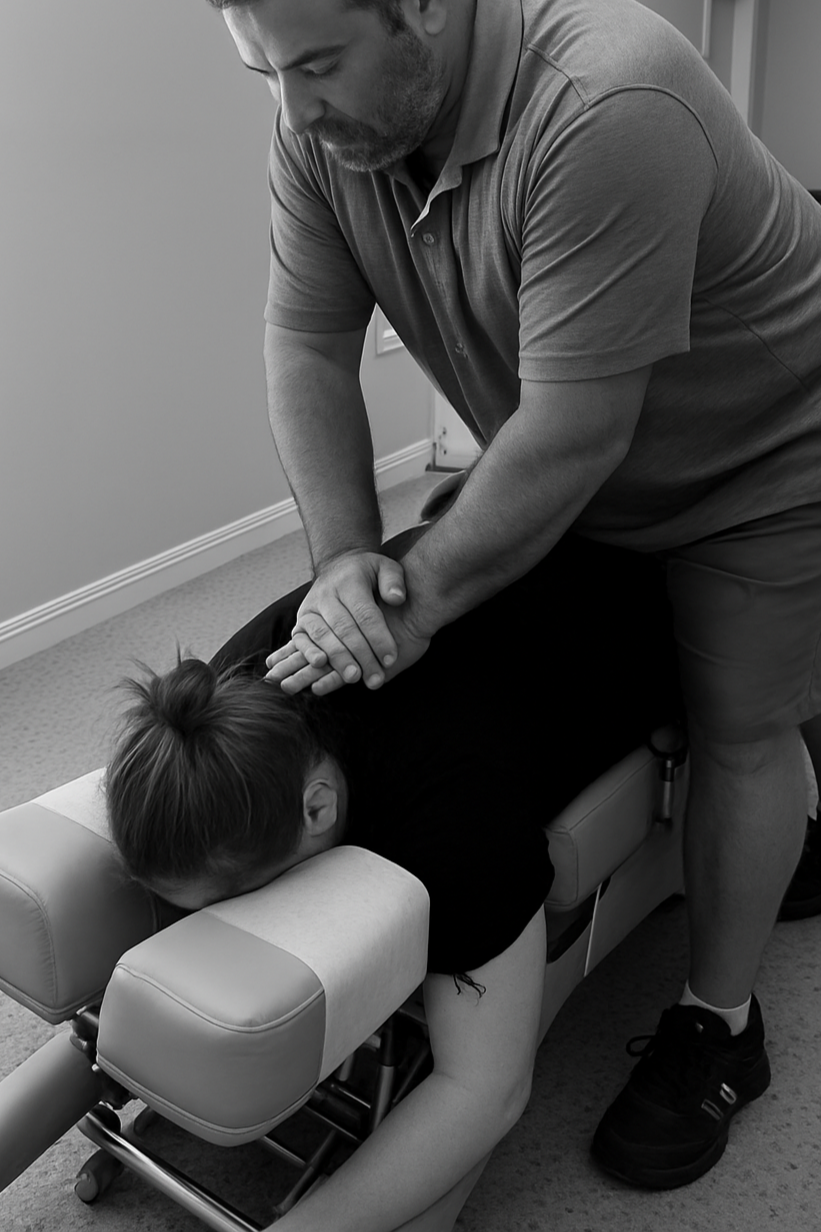
At Dr. Arthur Poisal Chiropractic, we start by listening to when your symptoms appear, what positions affect them, and how they fit with your work, sleep, and daily activities. An assessment may include comfortable checks of neck and upper-back movement, along with relevant strength and sensation checks. The aim is to understand the pattern and decide whether chiropractic care is appropriate, not to assume every neck problem comes from the spine.
If the findings support it, a plan may include hands-on chiropractic care, mobility work, and practical suggestions for daily movement or sleep positioning. We’ll explain the options and tailor them to your comfort and goals. Explore our Neck & Shoulder Pain Relief page to learn more.
For selected lingering soft-tissue complaints, shockwave therapy may be considered after an assessment. It isn’t a fit for every cause of neck pain, including nerve-related symptoms, and it can’t guarantee a particular result. If your symptoms suggest you need a different kind of medical evaluation, we’ll help you understand that next step.

Neck pain when lying down in Knoxville, TN, can make evenings feel frustrating, but you don’t have to guess at the cause indefinitely. If you’d like to talk through what you’re noticing, call (865) 687-5700 or visit us at 3371 Whittle Springs Road, Knoxville, TN 37917. We’ll be happy to listen and help you decide on a manageable next step.
FAQs
Can my pillow cause neck pain when I lie down?
It can contribute if it holds your head too high, too low, or at an uncomfortable angle. Pillow fit is individual, so try one small adjustment and notice how it feels.
Why does my neck hurt more when I recline on the couch?
A couch may place your head forward, tipped back, or turned to one side. Holding that position for a while can make existing muscle or joint sensitivity more noticeable.
Should I stop sleeping on my stomach?
If stomach sleeping seems to aggravate your neck, try transitioning to your side or back if comfortable. Stomach sleeping usually keeps the head turned for an extended period.
Is gentle neck movement okay before bed?
Gentle movement within a comfortable range may be reasonable for mild symptoms. Stop if it causes sharp pain, spreading symptoms, tingling, or weakness.
When should I seek help for neck pain at night?
Arrange an assessment if the pain keeps returning, lasts into the day, affects sleep, or comes with arm symptoms, numbness, tingling, weakness, or headaches. Seek urgent care for significant injury, fever with severe stiffness, sudden severe headache, progressive weakness, balance problems, or bladder or bowel changes.