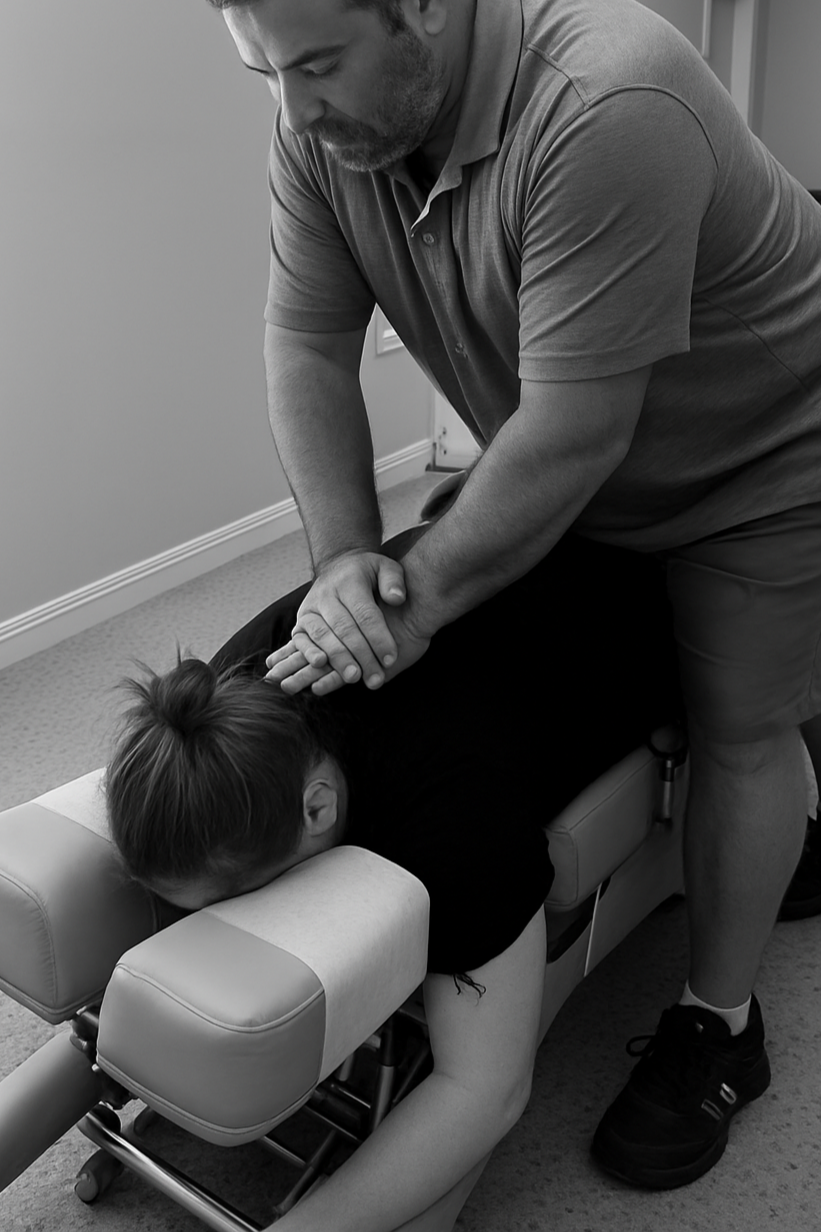
Shoulder Clicking and Popping Knoxville TN: What It Means

You hear a click while pressing a weight overhead. Your shoulder pops during push-ups, snaps when you roll it backward, or makes a grinding sound as you reach for something on a shelf. Sometimes you can feel the movement as clearly as you hear it.
It’s understandable to wonder whether something is torn, damaged, or “out of place.” The good news is that many shoulder sounds are harmless. But clicking that comes with pain, catching, locking, weakness, swelling, or a recent injury deserves a closer look.
Shoulder clicking and popping Knoxville TN: should you worry?
A painless click that happens occasionally may come from normal joint movement. Small gas bubbles can form and release inside the joint, creating a pop called cavitation. This is similar to cracking your knuckles.
Other sounds happen when a tendon, ligament, or the shoulder blade moves across nearby tissue. The sound itself does not always tell you whether there is a problem.
Pay closer attention if the sound is accompanied by:
- Pain during or after the click
- A feeling of catching, locking, or giving way
- New weakness or difficulty lifting your arm
- Swelling, warmth, or visible bruising
- A sense that the shoulder is slipping or coming out of place
- Numbness or tingling into the arm
- A pop that started during a fall, collision, or heavy lift
The bigger picture matters more than the noise alone.
What may be making the sound?
Your shoulder is more than one joint. It includes the ball-and-socket joint, rotator cuff, shoulder blade, collarbone, upper back, ribs, and neck. Several structures may contribute to clicking or popping.
Gas bubbles inside the joint
Cavitation can create a single pop when the joint changes position. This is usually painless and not harmful when your movement, strength, and function are normal.
Tendons moving over bone
The rotator cuff tendons help center the upper arm in the socket. They glide beneath the acromion, a bony part of the shoulder blade. If a tendon is sensitive, swollen, or not moving smoothly, it may snap over a nearby structure.
The subacromial bursa is another small cushion in this area. Irritation around the bursa or rotator cuff can make movement feel rougher or more uncomfortable.
The long head of the biceps tendon runs through a groove at the front of the shoulder. If the tissues holding it in place are strained, the tendon may shift and create a noticeable snap during rotation or overhead movement.
Labral irritation or injury
The labrum is a ring of cartilage around the shoulder socket. It helps deepen the socket and support stability. A labral problem may cause a deep click, catching, or grinding sensation, especially after a fall, dislocation, heavy lift, or repeated throwing.
A deep click does not automatically mean you have a labral tear. An examination is needed to understand whether the sound is painful, whether the joint feels unstable, and what movement reproduces it.
Shoulder-blade movement
Your scapula, or shoulder blade, glides over the rib cage as you raise and lower your arm. If the muscles controlling it are tired, weak, or poorly coordinated, the shoulder blade may move unevenly.
This can create popping or grinding along the inner edge of the shoulder blade. It is sometimes called snapping scapula. Upper-back stiffness, poor endurance, previous injury, or changes in training can all affect this movement.
Other possibilities
Clicking may also be related to:
- The acromioclavicular, or AC, joint on top of the shoulder
- An AC joint sprain or previous separation
- Shoulder instability after repeated dislocations or subluxations
- Arthritis and rougher joint surfaces
- Loose bodies inside the joint
- Pain referred from the neck or upper back
This is why the painful or noisy spot is not always the original source of the problem.

Why does the clicking keep happening?
One thing we commonly see in our office is that shoulder sounds become more noticeable after a change in activity. You may increase pressing at the gym, start throwing again, spend a weekend doing yard work, or return to overhead tasks before the shoulder has rebuilt enough strength and endurance.
Other factors can keep the pattern going:
- Repeated loading without enough recovery
- Guarding the shoulder after an injury
- Loss of rotator cuff or shoulder-blade strength
- Poor scapular control or endurance
- Stiffness in the upper back
- Returning to pressing or overhead work too quickly
- A previous injury that was never fully rehabilitated
- Sleeping in a position that keeps the shoulder irritated
- Worrying about the sound and repeatedly testing it
That last cycle is common. You hear a click, become concerned, test the movement again, tighten the surrounding muscles, and then notice the click even more. The sound may be real, but the protective response can make the shoulder feel less comfortable and less coordinated.
How a shoulder evaluation works
A useful assessment starts with your experience. We’ll ask when the clicking began, whether there was an injury, where you feel it, and what activities bring it on.
The examination may include:
- Active and passive shoulder range of motion
- Rotator cuff and biceps strength testing
- Assessment of shoulder-blade control during arm movement
- Testing for joint stability and painful catching
- Palpation around the rotator cuff, biceps groove, AC joint, and scapula
- Neck and upper-back screening
- Checks for nerve-related symptoms
We may try to reproduce the sound and determine whether it comes from the shoulder joint, a tendon, the scapula, the AC joint, or a related area.
Imaging is not automatically needed for painless clicking. However, an X-ray, ultrasound, MRI, or orthopedic evaluation may be reasonable when there is significant trauma, ongoing weakness, instability, locking, reduced function, or symptoms that do not fit the initial examination.
Seek prompt medical evaluation for:
- Major trauma, deformity, or suspected dislocation
- Sudden inability to lift the arm
- Locking or catching with repeated giving-way
- A hot, red, swollen joint with fever
- New numbness or significant weakness
- Chest pain or shortness of breath
What you can try now
If the clicking is mild and you have no red flags, you can often start with simple changes:
- Keep the shoulder moving through comfortable ranges.
- Temporarily reduce heavy pressing, throwing, and overhead loading.
- Avoid repeatedly testing the click throughout the day.
- Try gentle rotator cuff and shoulder-blade exercises.
- Add brief upper-back mobility breaks if you sit or drive for long periods.
- Keep your posture relaxed rather than forcing your shoulders down and back.
- Do not force painful end ranges or aggressive stretches.
- Pay attention to how the shoulder responds later that day and the next morning.
A little movement is often better than complete avoidance, but sharp pain, increasing weakness, or a worsening pattern is a reason to stop self-testing and arrange an evaluation.

How care may help
Care should be based on what the examination finds. Depending on the pattern, a plan may include:
- Chiropractic adjustment when restricted joint motion is part of the problem
- Soft-tissue work for sensitive or overactive muscles
- Shoulder-blade and upper-back mobility
- Progressive rotator cuff and scapular strengthening
- Guidance on pressing, lifting, throwing, work, and recovery
- A gradual return to the activities you enjoy
Spinal decompression or dry needling is not automatically appropriate for shoulder clicking. Those options would only be considered if your assessment identified a separate problem where they may be relevant.
Shockwave Therapy may be considered for selected, persistent rotator cuff-related tendinopathy or a localized soft-tissue problem after assessment. It is non-invasive, but it can be uncomfortable and does not work for every diagnosis. It is not a treatment for shoulder instability, labral tears, nerve symptoms, or every joint problem, and improvement is not guaranteed.
If your symptoms are affecting lifting, work, yard work, or daily activities, our shoulder pain treatment approach in Knoxville can help clarify what may be contributing.
For related reading, you can also explore our guide to shoulder pain when reaching overhead or learn how neck and upper-back mechanics can influence shoulder symptoms.
A comfortable next step in Knoxville
A shoulder click does not automatically mean something is torn. It also should not be dismissed when it comes with pain, weakness, instability, or loss of function.
Dr. Arthur Poisal Chiropractic takes time to listen, assess the shoulder and connected movement system, and explain what may make sense next. We’re located at 3371 Whittle Springs Road, Knoxville, TN 37917.
Call (865) 687-5700 or send a note through our contact page. We’ll be happy to help you find the right place to begin.
Frequently Asked Questions
Is shoulder clicking always bad?
No. Occasional, painless clicking can come from cavitation or normal tendon and shoulder-blade movement. It becomes more concerning when it includes pain, weakness, swelling, instability, catching, or a change in function.
Why does my shoulder pop if it doesn’t hurt?
A painless pop may come from gas bubbles in the joint or a tendon moving across bone. If your strength and movement are normal and there was no injury, it may not require treatment. Monitor it rather than repeatedly testing the movement.
Does a shoulder click mean I have a tear?
Not necessarily. Rotator cuff or labral injuries can cause painful clicking, but clicking alone cannot diagnose a tear. Your symptoms, injury history, strength, stability, and examination findings matter.
Does grinding mean arthritis?
Grinding can occur with arthritis or rougher joint surfaces, but it may also come from the shoulder blade moving over the ribs or irritated soft tissue. Persistent coarse grinding with stiffness or loss of motion deserves evaluation.
When should I get shoulder clicking evaluated?
Arrange an evaluation if the clicking is painful, began after an injury, causes catching or giving-way, comes with weakness or numbness, or interferes with work, exercise, sleep, or daily activities. Seek prompt medical care for deformity, sudden inability to lift the arm, fever with a hot swollen joint, chest pain, or shortness of breath.
Written and clinically reviewed by Dr. Arthur Poisal, DC.