A clearer place to start
Shoulder Pain Treatment in Knoxville, TN
Start with a careful explanation of why your shoulder is limiting you.
If shoulder pain is changing how you sleep, reach overhead, get dressed, work, or exercise, a useful plan begins with more than the sore spot. In Knoxville, Tennessee, Dr. Arthur Poisal takes time to understand the pattern, the demands on your body, and the next step that makes sense for you.
Start with the basics
What shoulder pain is—and why the details matter.
Shoulder pain is a symptom, not a single diagnosis. The shoulder is a coordinated system of the ball-and-socket joint, rotator cuff, shoulder blade, collarbone, upper back, ribs, and neck. Pain may feel sharp, aching, stiff, weak, catching, or hard to locate, and the same word can describe very different problems.
Common shoulder conditions seen in practice include rotator cuff irritation, frozen shoulder or adhesive capsulitis, impingement-related pain, strains, and symptoms influenced by posture or the neck and upper back. Looking beyond the shoulder does not dismiss it; it helps place the symptom in context and guides a more useful plan.
Patterns we listen for
Symptoms and causes are part of the story.
Common symptoms
- Pain at night or when lying on the affected side.
- Difficulty reaching overhead, behind your back, or across your body.
- Stiffness, weakness, clicking, catching, or a feeling that the arm is less dependable.
- Pain with dressing, lifting, driving, work, throwing, swimming, or exercise.
Common contributors
- A new lifting, throwing, swimming, or training demand.
- Repetitive reaching, desk work, driving, or sustained positions.
- Prior shoulder or neck injury that changed how you move.
- Changes in shoulder-blade control, upper-back mobility, strength, sleep, or recovery.
When it keeps returning
Why shoulder problems sometimes become chronic.
A shoulder can remain sensitive when the original irritation never gets a manageable chance to settle, but persistence is not always as simple as “too much activity.” People often protect the arm, lose strength or confidence, then ask the shoulder to handle normal life with fewer options. A change in movement can also shift extra work to the neck, upper back, or another tissue.
Frozen shoulder, recurring tendon irritation, sleep disruption, stress, limited mobility, and repeated work or sport demands can reinforce one another. That does not mean the pain is imaginary or that the shoulder is permanently damaged. A useful plan may need to address symptoms, movement, strength, recovery, and the activity that matters to you. The aim is steady progress with clear limits—not forcing a painful joint to prove anything.
A thorough first step
What Dr. Arthur Poisal evaluates.
Your history and goals
When did the pain begin? Was there a fall, lift, training change, sleep change, or gradual shift? What have you tried, and what do you want to do more comfortably in Knoxville and beyond?
The shoulder itself
The assessment considers comfortable range of motion, strength, tenderness, stability, shoulder-blade movement, and the positions that reproduce or ease your symptoms.
The neck and connected chain
Neck movement, upper-back and rib mobility, posture, nerve-related symptoms, and how the shoulder blade shares the work may all influence what the shoulder is being asked to handle.
The right next step
If the findings suggest imaging, medical evaluation, orthopedic care, medication, or another professional, that recommendation is part of good care—not a failure of the visit.
How care may fit
Chiropractic care should support useful movement.
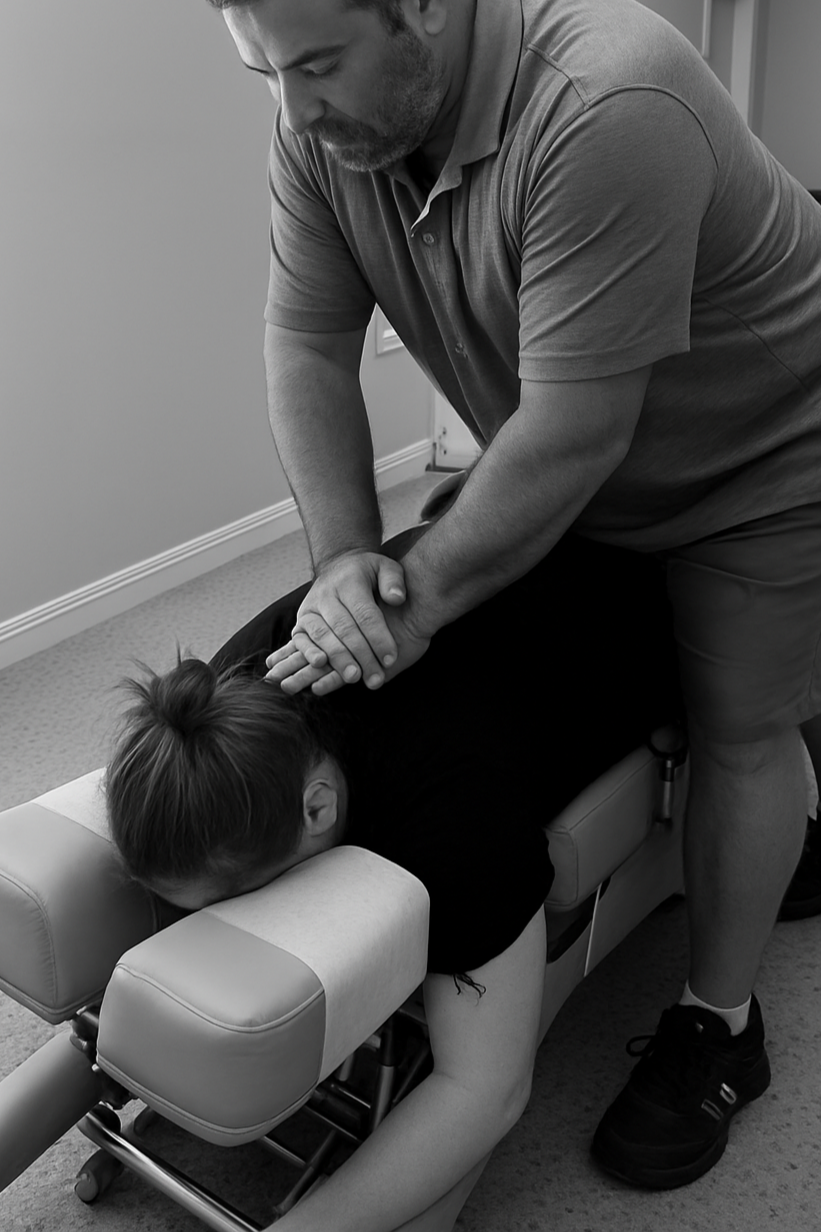
Depending on the assessment, care may include a gentle chiropractic adjustment, hands-on work, shoulder and upper-back mobility, progressive strength and control work, or guidance about activity and recovery. The treatment is selected for the problem in front of you—not because every shoulder needs the same routine. A visit may focus on the shoulder, but it can also include the neck, ribs, upper back, and the movement that brings symptoms on.
Care is meant to give you a clearer next step between visits. That might be a short set of mobility exercises, a temporary change to reaching or lifting, a more comfortable sleep position, or a gradual return to loading. You should know what to try, what response to watch for, and when to check in again.
A focused option when it fits
When Shockwave Therapy may be considered.
Shockwave Therapy may be an option when symptoms have persisted and an assessment points toward a suitable tendon, muscle, or other soft-tissue problem around the shoulder, such as selected rotator cuff-related irritation. It uses focused sound-wave pulses and is non-invasive, but it is not a universal shoulder treatment and it does not guarantee improvement. The area, your health history, and your tolerance all matter. Read the existing Shockwave Therapy service page to understand how this option fits into a broader plan.
Related care in Knoxville
The right service depends on the whole picture.
Shoulder pain can overlap with several kinds of care. These existing pages explain how each may contribute without promising that every option is right for every person.
Neck & Shoulder Pain Relief
The broader service entry point for posture, recurring tension, headaches, and neck-related shoulder symptoms.
Explore careShockwave Therapy
A focused, non-invasive option that may fit selected persistent tendon, muscle, or soft-tissue problems.
Explore careSports Chiropractic & Injury Rehab
Assessment and progressive care for athletes and active adults returning to lifting, throwing, swimming, or sport.
Explore careAdjustments & Mobility Care
Hands-on care and practical exercises for comfortable reaching, rotation, and everyday movement.
Explore careJoint Pain Relief
A whole-joint and whole-body view when shoulder pain is part of a larger movement pattern.
Explore careIs this a fit?
Who may benefit—and when to pause.
It may be a reasonable conversation for adults with activity-related shoulder pain, recurring stiffness, an old injury, rotator cuff-related irritation, frozen-shoulder symptoms, or a shoulder that has become less predictable during daily life.
It may also help active people who want a thoughtful return-to-lifting, throwing, swimming, work, or exercise plan rather than an all-or-nothing answer.
A chiropractic visit is not the right first stop for every shoulder problem. A major injury, deformity, sudden loss of arm function, hot red joint with fever, chest symptoms, or new neurological symptoms calls for prompt medical evaluation.
If symptoms are not improving as expected, or the findings suggest a fracture, significant tear, infection, nerve problem, or another condition needing medical treatment, referral or imaging is the safer next step.
What to expect
- 1. Share the full pattern, including what you can no longer do comfortably or when pain wakes you.
- 2. Receive a focused shoulder, neck, and connected-movement assessment.
- 3. Discuss care, self-management, and whether imaging or another evaluation is needed.
- 4. Reassess based on meaningful changes in function, not a promised timeline.
Questions patients ask
More clarity before you call.
Can chiropractic care help shoulder pain in Knoxville, Tennessee?
It may help some people move more comfortably and build tolerance for reaching, work, sleep, exercise, or daily life. The right approach depends on the findings, how symptoms began, and your overall health. Chiropractic care is not a guarantee and is not a replacement for medical care when imaging, medication, surgery, or another specialist is more appropriate.
What shoulder conditions do you commonly evaluate?
An assessment may consider rotator cuff irritation, frozen shoulder or adhesive capsulitis, impingement-related pain, a strain, joint sensitivity, postural shoulder pain, and symptoms influenced by the neck or upper back. These labels can overlap, so the history and examination matter more than guessing from a symptom alone.
Why does my shoulder hurt at night or when I sleep?
Night pain can occur when a sensitive shoulder is held in one position, compressed, or asked to rest on an irritated side. It may occur with rotator cuff-related pain, frozen shoulder, joint problems, or other conditions. Persistent night pain in Knoxville deserves a careful assessment, especially when it is worsening or affecting sleep.
Is Shockwave Therapy an option for shoulder pain?
Sometimes. Shockwave Therapy may be considered when the assessment points toward a suitable persistent tendon, muscle, or other soft-tissue problem. It is not appropriate for every shoulder condition, including every tear, nerve symptom, or joint problem, and the area should be assessed before treatment. Learn more on the Shockwave Therapy page.
When should I seek medical evaluation or imaging for shoulder pain?
Seek prompt medical evaluation after a major injury, a visibly deformed shoulder, sudden inability to lift the arm, rapidly increasing swelling, fever or a hot red joint, new numbness or weakness, chest pain or shortness of breath, or severe symptoms that are rapidly worsening. Imaging or referral may also be appropriate when progress does not match the working explanation.
What can I expect at my first shoulder pain visit?
Expect time to describe your symptoms and goals, a focused shoulder and connected-movement assessment, a plain-language explanation, and a discussion of reasonable next steps. You should be able to ask questions and understand why care, self-management, imaging, or referral is being recommended.
Keep exploring
Useful shoulder, neck, and mobility reading.
These existing articles answer narrower questions about shoulder symptoms, frozen shoulder, posture, mobility, sleep, and related neck pain. The treatment guide above is the best starting point for the full picture.
Ready to talk it through?
Start with a conversation, not a commitment.
Tell us what has changed, what you have tried, and what you would like to do more comfortably. The office can help you find the right place to begin.