A clearer place to start
Sciatica Treatment in Knoxville, TN
Start with a careful explanation of why pain may be traveling into your leg.
If pain, burning, tingling, numbness, or weakness is moving from your lower back or buttock into your leg or foot, sciatica-focused care begins with finding out what the pattern means. In Knoxville, Tennessee, Dr. Arthur Poisal listens first and builds the next step around your symptoms, health, and goals.
Start with the basics
What sciatica is—and how it differs from general low back pain.
Sciatica is a description of nerve-related symptoms that follow part of the sciatic nerve pathway. The nerve roots begin in the lower spine and contribute to a large nerve that travels through the buttock and down the leg. When a nerve root is irritated, inflamed, or compressed, symptoms may travel farther than the low back itself.
General low back pain may stay near the spine and can involve muscles, joints, discs, movement demands, or several factors together. Sciatica is more specifically associated with radiating leg symptoms. The two can overlap, but the difference matters because pain that travels, changes sensation, or affects strength deserves a more focused assessment.
Patterns we listen for
Symptoms and causes are part of the story.
Common symptoms
- Sharp, aching, burning, electric, or deep pain traveling into the buttock, thigh, calf, or foot.
- Tingling or pins-and-needles, numbness, or a leg that feels less reliable than usual.
- Weakness, difficulty lifting the foot, or trouble walking, standing, sitting, sleeping, or changing position.
- Symptoms that change with sitting, bending, coughing, lifting, walking, or certain positions.
Common contributors
- A bulging or herniated disc irritating a nearby nerve root.
- Spinal stenosis or age-related changes that narrow space around nerves.
- Irritated muscles, including deep buttock muscles, or restricted hip and pelvic movement.
- Postural and movement demands, prior injury, or another condition affecting the nerve pathway.
When it keeps returning
Why sciatica can become persistent or flare again.
Radiating symptoms may keep returning when the original irritation has not had a manageable chance to settle, but persistence is rarely explained by one thing. People often guard the painful side, move less, lose strength or confidence, and then ask the back and leg to handle normal life with fewer options. Sitting, lifting, training, sleep, stress, and a sudden increase in activity can all influence the response.
Long-lasting nerve pain can also make the nervous system more protective. That does not make the symptoms imaginary. It means a useful plan may need to address irritation, mobility, strength, recovery, and the activities that matter to you. The goal is steady progress with clear boundaries—not forcing a nerve to tolerate more just to prove something.
A thorough first step
What Dr. Arthur Poisal evaluates.
Your symptom map
When did it begin, where does it travel, and what do pain, tingling, numbness, or weakness do across a normal Knoxville day?
Strength and sensation
The assessment may consider strength, sensation, reflexes, walking, balance, comfortable movement, and the positions that change your symptoms.
The connected movement
The lower back, pelvis, hip, leg, and foot can all influence how you move and how much load reaches an irritated area.
The safest next step
If your findings suggest imaging, medication, urgent medical evaluation, specialist care, or another professional, that recommendation is part of responsible care.
How care may fit
Chiropractic care should support useful movement.
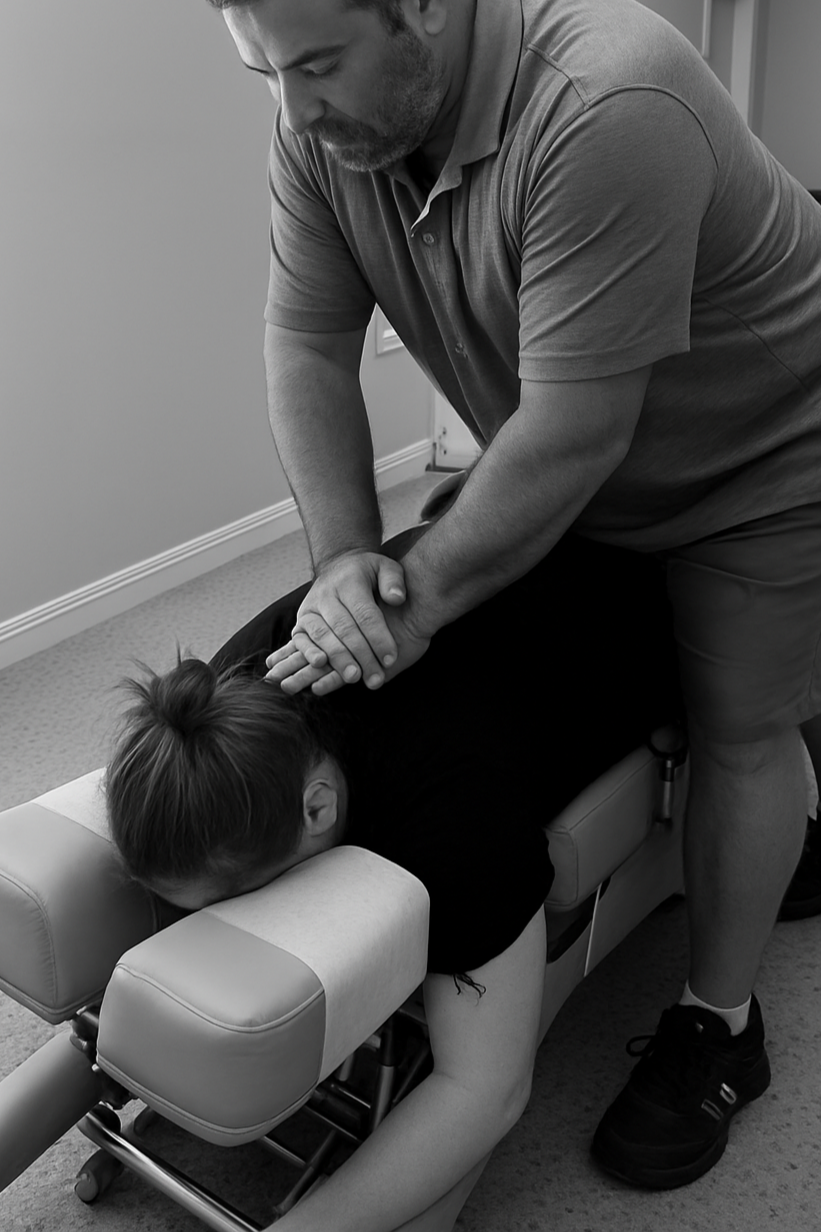
Depending on the assessment, care may include a gentle chiropractic adjustment, hands-on work, mobility exercises, strength and control work, or guidance about positions, activity, and recovery. Adjustments are not a test of toughness and are not the whole point. If they are appropriate, they should support a broader plan you understand.
Practical movement care can help you find a manageable way to walk, change positions, and rebuild tolerance between visits. Learn more about Chiropractic Adjustments & Mobility Care, and explore Sports Chiropractic & Injury Rehab when returning to training is part of your goal.
Focused options when they fit
When decompression or Shockwave Therapy may be considered.
Spinal decompression therapy may be considered when symptoms appear connected to irritation around a spinal disc. It is a low-force, non-surgical option for selected people, not a guaranteed fix and not the right answer for every cause of leg pain.
Shockwave Therapy uses focused sound-wave pulses and may fit a selected persistent muscle, tendon, or other soft-tissue problem near the hip or back. It does not automatically treat nerve-related pain. The area, your health history, and your response to an assessment all matter.
Related care in Knoxville
The right service depends on the whole picture.
Sciatica can overlap with disc-related care, general low back pain, movement restrictions, soft-tissue problems, or the demands of sport. These existing pages explain where each option may fit without promising that every service is right for every person.
Low Back Pain Relief
A broader assessment for lower back pain when symptoms are not primarily traveling nerve-related leg symptoms.
Explore careSpinal Decompression Therapy
A low-force option that may fit selected disc-related back or leg symptoms after a careful assessment.
Explore careAdjustments & Mobility Care
Hands-on care and practical movement work to support comfortable mobility between and beyond visits.
Explore careShockwave Therapy
A focused option for selected muscle, tendon, or soft-tissue contributors—not a universal treatment for nerve pain.
Explore careSports Chiropractic & Injury Rehab
Progressive support when radiating symptoms have interrupted running, lifting, training, or an active routine.
Explore careIs this a fit?
Who may benefit—and when to pause.
It may be a reasonable conversation for adults with radiating leg pain, recurring buttock or hip symptoms, disc-related concerns, or a return to walking, work, exercise, or sport that has become uncertain.
It may also help people who want a thoughtful plan for movement and recovery rather than complete rest or a generic adjustment.
Significant or rapidly worsening weakness, new foot drop, loss of bowel or bladder control, or numbness in the saddle area needs prompt medical attention rather than a routine appointment.
Fever, major trauma, symptoms in both legs, severe worsening pain, or findings that suggest a serious condition also call for medical evaluation and possible imaging or referral.
What to expect
- 1. Share the full symptom pattern, including what you can no longer do comfortably.
- 2. Receive a focused assessment and plain-language explanation.
- 3. Discuss care, self-management, and whether medical evaluation or imaging is needed.
- 4. Reassess meaningful changes in pain, sensation, strength, and function—not a promised timeline.
Questions patients ask
More clarity before you call.
What is the difference between sciatica and general low back pain?
General low back pain can stay around the low back and may come from joints, muscles, discs, or movement demands. Sciatica describes pain or other nerve-related symptoms that travel from the lower back or buttock into the leg, sometimes reaching the foot. The label is a starting point, not a complete diagnosis.
Can chiropractic care help sciatica in Knoxville, Tennessee?
It may help some people move more comfortably when the assessment suggests a conservative plan is appropriate. Care may include gentle adjustments, mobility work, exercises, and activity guidance. It is not a guarantee and is not a substitute for prompt medical care when weakness or other red flags are present.
Should I get an MRI before sciatica treatment?
Not always. A thorough history and examination often help determine whether imaging is needed. Imaging or medical evaluation may be appropriate for progressive neurological changes, significant trauma, persistent or worsening symptoms, or when the result would change treatment or referral.
Can spinal decompression help sciatica?
It may be considered when symptoms appear connected to irritation around a spinal disc. Not every case of radiating leg pain comes from a disc, so the assessment comes before choosing decompression. Read the spinal decompression service page for more about how the option fits.
When should I seek urgent medical care for sciatica?
Seek medical care promptly for significant or rapidly worsening weakness, new foot drop, loss of bowel or bladder control, saddle numbness around the groin or inner thighs, symptoms in both legs, fever, major trauma, or severe symptoms that are getting worse. These signs deserve medical evaluation rather than waiting for a routine chiropractic appointment.
How long does sciatica treatment take?
There is no honest one-size-fits-all timeline. The course depends on the cause, how long symptoms have been present, whether numbness or weakness is involved, your response to care, and your goals. We look for meaningful changes in function and adjust the plan when progress does not make sense.
Keep exploring
Useful sciatica and radiating leg pain reading.
These existing articles answer narrower questions about sciatica, discs, low back pain, decompression, mobility, and soft-tissue contributors. The treatment guide above is the best starting point for the full picture.
Ready to talk it through?
Start with a conversation, not a commitment.
Tell us where the symptoms travel, what you have tried, and what you would like to do more comfortably. The office can help you find the right place to begin.