Wrist Pain When Bending Knoxville TN: What It Means

If bending your wrist to type, pick up a mug, or push yourself up from a chair brings on pain, even ordinary tasks can start to feel uncertain. You may notice it when bending your hand up or down, or moving it toward your thumb or little finger. Wrist pain when bending Knoxville TN patients experience can have several possible causes, so the direction of pain is a useful clue, but it doesn’t diagnose the problem by itself.
What the direction of wrist pain may tell you
Bending your wrist toward your palm is called flexion; bending it toward the back of your hand is extension. Pain toward the palm or back of the wrist may involve local tendons, joints, or other tissues. Pain when moving toward the thumb side is radial-sided; moving toward the little-finger side is ulnar-sided.
The location and the task matter, too. Notice whether it hurts most when you bend without a load, grip something, rotate your forearm, or lean through your hand. These details help guide an assessment.

Common causes of wrist pain when bending
Wrist tendons help move and steady your hand. Repeated gripping, lifting, tool use, gym work, or long hours at a keyboard can irritate them, especially after a sudden increase in activity. Pain on the thumb side that worsens with thumb movement or gripping can sometimes involve the tendons associated with De Quervain’s tenosynovitis. Pain on the little-finger side, particularly with forearm rotation or loaded side-bending, may involve the TFCC, a structure that helps support the wrist. Other causes are possible, so an examination matters.
Carpal tunnel syndrome is different: it involves irritation or pressure on a nerve, not simply a tendon that hurts because you bent your wrist. Wrist positions may aggravate symptoms, but tingling, numbness, or weakness in the hand can point toward nerve involvement and deserve attention.
Sometimes the source is not local to the wrist. Neck-related nerve irritation can cause symptoms farther down the arm. That’s one reason we look at the bigger picture rather than assuming the sore spot tells the whole story. Our article on joint pain that may come from somewhere else explains why the location of pain doesn’t always identify its source.
Wrist and elbow tendon problems often show up together, since the same forearm muscles do the gripping. If your pain leans more toward the elbow, our post on tennis elbow that keeps coming back covers that side of the arm.
Why wrist pain can keep returning
One thing we commonly see in our office is a wrist that gets a little relief, then flares again when the usual tasks resume. Keyboard and phone use, gym grip work, tools, kettlebells, and push-ups can all add up. If daily loading keeps exceeding what the irritated tissue can currently handle, it may not get a steady chance to settle and adapt.
A lot of patients assume stretching alone will solve the problem. Gentle movement can help maintain comfort, but stretching doesn’t necessarily rebuild tolerance for gripping or lifting. And if the same aggravating position and workload continue unchanged, symptoms may return. Often, progress calls for adjusting the load first, then gradually rebuilding it.
Try a few practical adjustments
If there was no significant injury and your symptoms are mild, start by noticing which direction and activity bring on your familiar pain. Don’t force a bend or repeat a test that causes sharp pain.
You can also try:
- Keeping your wrist closer to neutral while typing, using a mouse, or gripping a tool.
- Taking brief breaks from repetitive tasks and changing positions when practical.
- Reducing the weight, duration, or frequency of a painful lift or grip for now.
- Avoiding loaded end-range bending, such as push-ups with your wrist sharply extended, while the area is sensitive.
- Returning to activity gradually, monitoring how your wrist feels during and after it.
These adjustments are starting points, not a substitute for an assessment if pain persists, worsens, or comes with tingling, numbness, or weakness.

How we assess wrist pain when bending Knoxville TN
At a visit, we’ll ask when the pain began, what movements bring it on, and what you need your wrist to do at work, at the gym, and at home. We may assess wrist and forearm movement, grip, nearby areas, and whether symptoms change with specific positions. If numbness, tingling, weakness, or symptoms traveling down the arm are present, we’ll consider the neck and nerve involvement as well.
Our goal is to understand what the findings suggest and whether chiropractic care is appropriate. If your history or examination raises concern for a fracture or another problem that needs medical assessment or imaging, we’ll recommend that next step rather than guessing.
Care should fit the cause and your goals
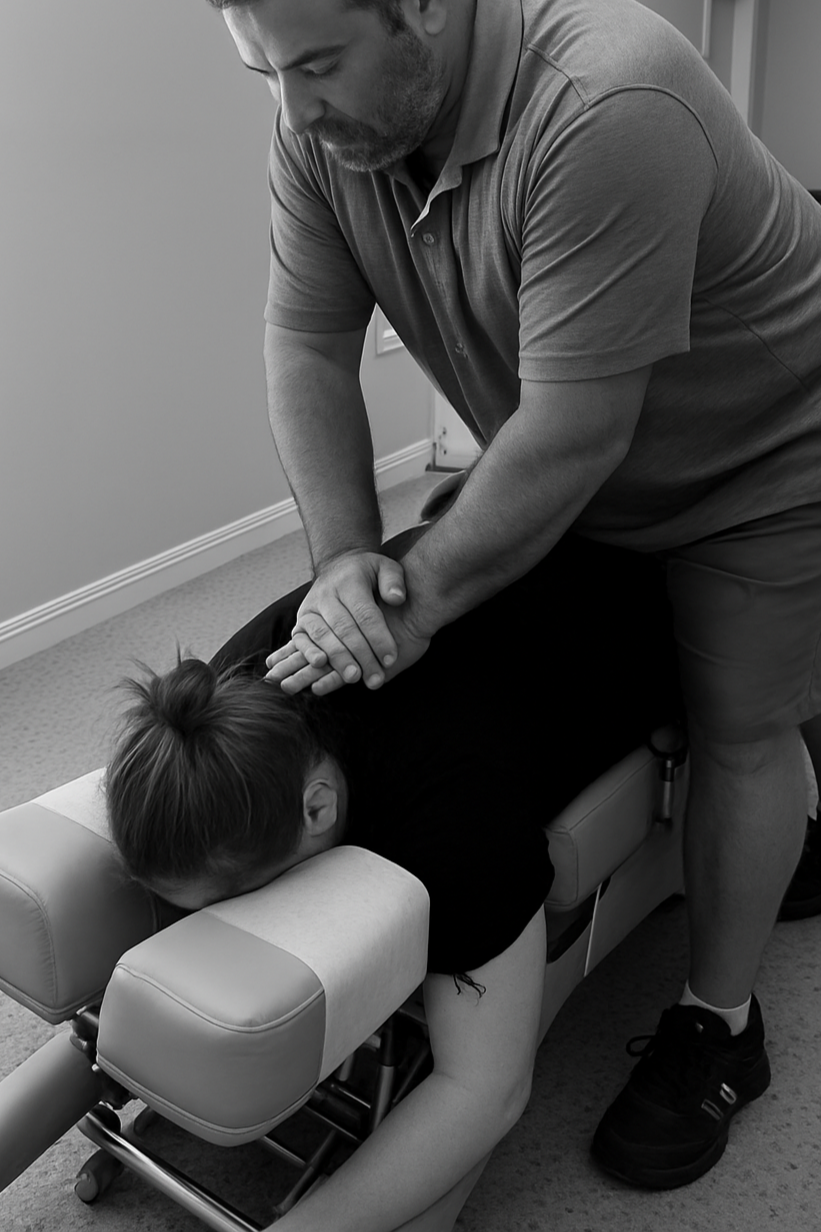
When appropriate, care may include hands-on treatment, mobility work, and guidance on changing aggravating activities. If you’re active, a plan may also address how to return to lifting or sport without jumping straight back to the same painful workload. Learn more about our approach to sports chiropractic and injury rehabilitation.
For stubborn tendon irritation, such as selected cases of De Quervain’s or dorsal wrist tendinopathy, Shockwave Therapy may be considered after assessment and load management. It isn’t appropriate for every wrist problem, and it doesn’t replace a suitable plan for gradually restoring activity.
And if shoulder or upper-arm pain is part of the picture, you can read more about our approach to shoulder pain treatment in Knoxville.
Timelines vary. Tendon-related issues may take weeks to months to improve, depending on the cause, how long symptoms have been present, and the demands on your wrist. We’ll focus on realistic progress and adjust the plan based on how you respond.
When to seek prompt medical care
Get prompt medical attention if your pain began after a fall onto your hand and persists, particularly with swelling or tenderness near the base of the thumb. A scaphoid fracture can need assessment even when the injury seems minor. Seek care promptly for a hot, swollen joint, significant trauma, sudden weakness, or a wrist that is rapidly worsening. Numbness, tingling, or dropping objects also deserves evaluation, especially if new or progressing.
Frequently asked questions
Should I keep bending my wrist if it hurts?
Don’t force painful movement. For mild symptoms without a significant injury, comfortable motion may be reasonable, but reduce activities that clearly aggravate it. Get assessed if pain continues or worsens.
Does bending my wrist cause carpal tunnel syndrome?
Bending alone doesn’t explain carpal tunnel syndrome. It is a nerve problem, and certain wrist positions may aggravate symptoms. Tingling or numbness in the hand warrants an assessment.
Can I keep lifting weights?
Possibly, with changes. Reduce the grip demand or load and avoid positions that clearly trigger pain. Return gradually, and don’t push through worsening symptoms.
How long does wrist tendon irritation take to improve?
There’s no single timeline. It may take weeks to months, depending on the tissue involved, daily demands, and how it responds to changes in loading.
When should I have wrist pain checked?
Arrange an assessment if pain keeps returning, interferes with daily activities, or comes with numbness, tingling, weakness, or reduced grip. Seek prompt medical care after significant injury or for a hot, swollen joint.
If you’re in Knoxville or a nearby community and wrist pain is getting in the way of work, exercise, or everyday tasks, we’re happy to talk through a next step. Call (865) 687-5700 or visit 3371 Whittle Springs Road, Knoxville, TN 37917. We’ll listen, assess what’s going on, and help you understand your options.
